YouTube buried the lede, but creators who read the documentation caught it. Tags matter "minimally" for search rankings. YouTube's own words. The platform that once encouraged elaborate tag strategies now barely uses them. So what replaced tags? What actually moves the ranking needle? The answer isn't a new hack. It's the same signals YouTube has always cared about, amplified by the one factor most creators ignore: whether your video exists in the searcher's language at all. You can have the perfect title, the richest description, and the most accurate subtitles. If they're all in Russian and someone searches in Portuguese, none of it matters. Your video doesn't exist for that query. Ranking starts with being findable. Being findable starts with speaking the searcher's language. Here's how to actually rank in 2026.
The Death of Tags: What YouTube Actually Said
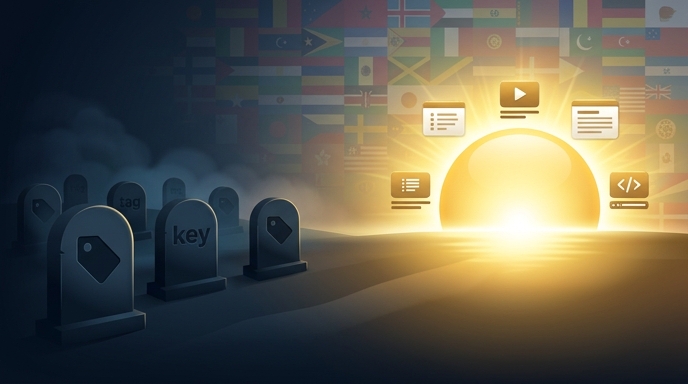
YouTube's official Creator Academy now states that tags play a "minimal" role in search discovery. They're still useful for common misspellings of your topic, but that's about it. The days of stuffing 30 tags into every video and watching the search traffic roll in are over. YouTube's algorithm has evolved far beyond simple keyword matching. It now analyses speech, subtitles, viewer behaviour, and semantic relevance to determine what a video is actually about and who should see it.
This shift killed a lot of lazy SEO strategies. Creators who relied on tag stuffing watched their search traffic decline. Creators who invested in real metadata — titles, descriptions, and subtitles that accurately describe their content — saw their rankings hold or improve. The lesson was clear: YouTube is getting smarter about understanding content, and surface-level keyword tricks no longer work. But this evolution also created a massive opportunity that most creators haven't noticed yet.
The Ranking Factor Nobody Talks About: Language Availability
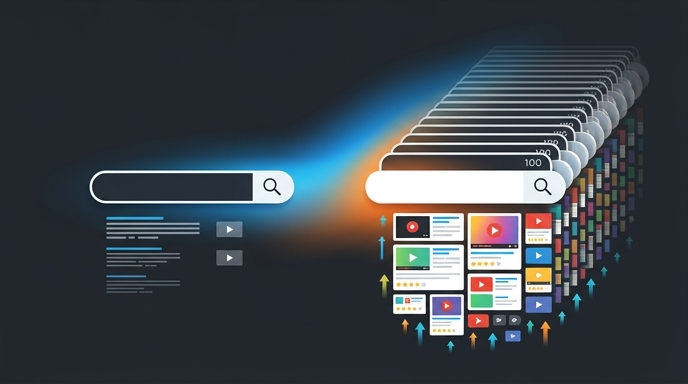
YouTube's algorithm doesn't just rank videos. It ranks videos within a specific language context. When someone searches in Portuguese, YouTube builds a candidate pool of videos with Portuguese metadata. Only then does it apply ranking signals like relevance, watch time, and engagement. If your video has no Portuguese metadata, it doesn't enter the candidate pool. It doesn't get ranked. It doesn't get shown.
This means the single biggest ranking factor isn't keyword optimisation or thumbnail CTR. It's whether your video is even eligible to be ranked in the searcher's language. A video with a mediocre Portuguese title will outrank a video with a perfect Russian title for a Portuguese search query — because the Russian video isn't in the running at all.
Most creators obsess over competing in one language pool. They tweak titles, test thumbnails, and analyse retention graphs to climb a few positions in Russian search results. Meanwhile, 100 other language pools sit completely uncontested. Your video could rank number one for a Portuguese search query with zero competition because you're the only creator in your niche who bothered to translate the title. That's not SEO optimisation. That's SEO monopoly.
Titles: Still the Heavyweight Champion
YouTube has confirmed repeatedly that the title is the most important metadata field for search ranking. It carries more weight than the description, more than tags, more than anything except the actual video content and viewer behaviour signals. A translated title in Portuguese is the single most powerful thing you can add to rank for Portuguese searches.
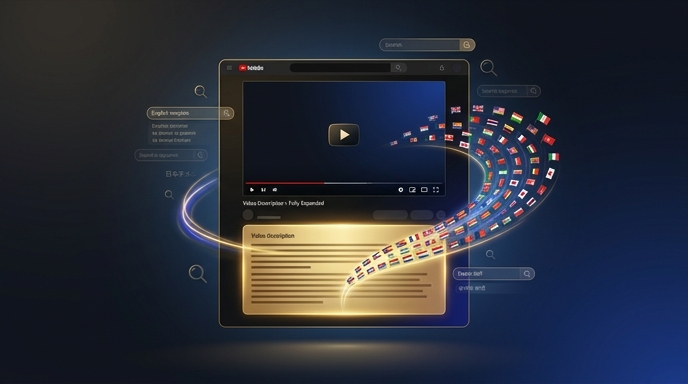
But here's what most creators miss: the title needs to be a native translation, not an auto-translation. YouTube's auto-translate feature creates a visual overlay for viewers, but it doesn't feed that translation into the search index. The search algorithm sees the original Russian title, not the auto-translated version. Only natively uploaded metadata through the API counts for ranking purposes. VidLocalizer pushes translations as native metadata, which means YouTube indexes them for search. The Portuguese title becomes as real to the algorithm as your original Russian title. It ranks accordingly.
Descriptions: The Underrated Workhorse
Descriptions don't carry as much weight as titles, but they provide context that helps YouTube understand your video's topic. A translated description reinforces the translated title, confirming to the algorithm that your video genuinely serves that language market. It also provides additional keyword opportunities — phrases and variations that might not fit in the title but match real search queries.
The best translated descriptions follow the same rules as original descriptions. Lead with the most important information. Include relevant keywords naturally. Add timestamps if your video has chapters. Keep it readable for humans first, optimised for search second. VidLocalizer's translations are localised, not literal, which means descriptions read naturally while containing the search terms that matter in each language.
Subtitles: The Secret Ranking Signal
YouTube indexes subtitle text for search. Every word in your subtitle track is crawlable, searchable, and rankable. This is the ranking signal hiding in plain sight. A video with accurate Portuguese subtitles has an enormous advantage over a video without them for Portuguese search queries.
Subtitles also boost watch time for international viewers, and watch time is YouTube's master ranking signal. A Portuguese speaker who finds your video through a translated title will stay longer if they have Portuguese subtitles to follow along. Longer watch time signals quality to the algorithm. Higher quality signals improve rankings. Improved rankings bring more viewers. The cycle feeds itself.
The combination — translated title, translated description, translated subtitles — creates a ranking trifecta. Each element reinforces the others. Together, they tell YouTube's algorithm that your video legitimately serves that language market. The algorithm rewards that signal with better rankings, more recommendations, and broader distribution.
The 100-Language Ranking Strategy
Here's the playbook. Stop obsessing over ranking #1 for a handful of Russian keywords. That's a small prize in a small pond. Instead, aim to rank on page one for one keyword in each of 100 languages. Not the most competitive keyword in each language. Just one relevant keyword where your video can land in the top ten.
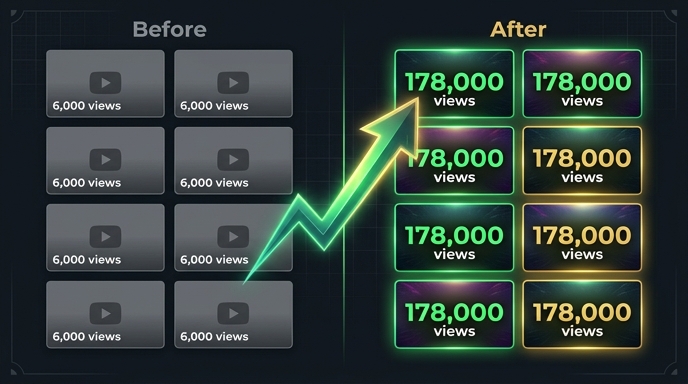
A video that ranks on page one for a keyword in Portuguese, plus another in Indonesian, plus another in Turkish, plus dozens more — that video generates more total search traffic than a video ranking #1 for a single Russian keyword. The math is simple. One hundred page-one rankings, each in a different language, each with its own search volume. The combined search traffic dwarfs anything possible in a single language.
This is the SEO strategy for 2026 and beyond. Not better tags. Not smarter keyword research. Broader language accessibility. Make your content findable in 100 languages, and the rankings take care of themselves. Tags died. Language availability is the new king.
Localize your YouTube channel today
3-day free trial · 80+ languages · cancel any time