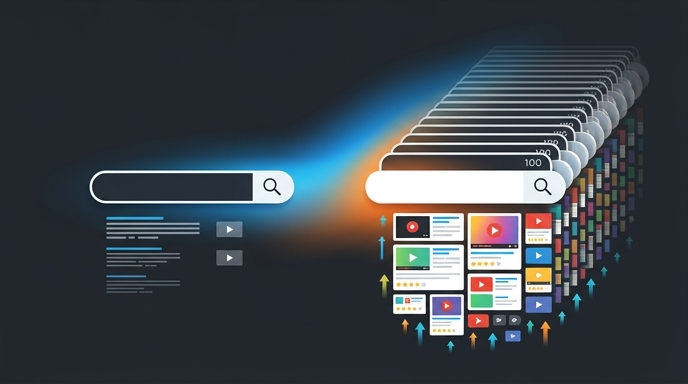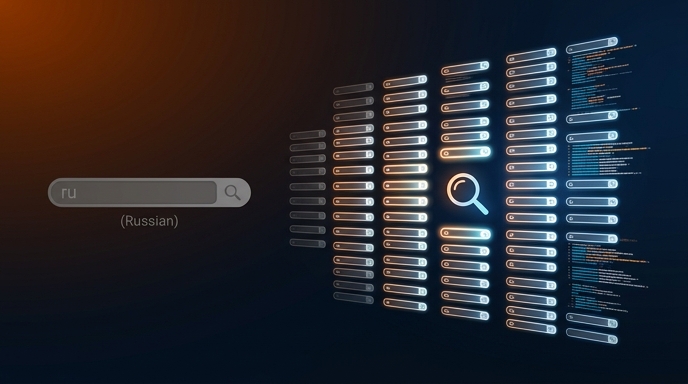
Search is YouTube's beating heart. Over three billion queries a month. Creators obsess over keywords, tags, and ranking factors trying to capture even a sliver of that traffic. But almost every SEO guide makes the same fatal assumption: that you're optimising for one search engine in one language. YouTube isn't one search engine. It's a network of over 100 language-specific search engines, each with its own index, its own ranking signals, and its own audience. A video with only Russian metadata exists in exactly one of those search engines. The other 99+ don't know it exists. Translating your titles changes that instantly. One video. One hundred searchable titles. One hundred search engines where your content can finally be found.
YouTube's 100+ Search Engines Explained
Here's how it actually works. When a viewer in Brazil types "como consertar um laptop" into YouTube, the platform doesn't search all videos and then translate results. It searches videos that already have Portuguese metadata — Portuguese titles, Portuguese descriptions, Portuguese subtitles. If your video about fixing laptops only has Russian metadata, YouTube doesn't even consider it for that query. Not as a low-ranked result. Not at all.
This means every language is a walled garden. Russian-language videos compete in the Russian search garden. Portuguese-language videos compete in the Portuguese search garden. The gardens don't overlap. A video with metadata in only one language is invisible to every other garden. Translation isn't about reaching bilingual viewers. It's about entering new walled gardens where your competition is different — or nonexistent.
The Title Is Your Search Engine Entry Ticket
YouTube's search algorithm weights the title more heavily than any other metadata field. Tags matter. Descriptions matter. But the title is the primary signal for determining relevance to a search query. If your title doesn't contain the words someone is searching for in their language, your video doesn't rank.
Translating your title into Portuguese means your video now contains those Portuguese keywords. It now matches Portuguese search queries. It now competes in the Portuguese search garden. Multiply that by 100 languages, and your video suddenly has 100 entry tickets into 100 separate search ecosystems. The content didn't change. The discoverability multiplied by 100.
Why Untranslated Titles Kill Your Global Reach
Some creators assume YouTube's auto-translate feature handles this. It doesn't. YouTube may auto-translate your title in the user interface for viewers who have translation enabled, but that auto-translated title is not indexed for search. It's a visual overlay, not searchable metadata. A Brazilian viewer might see an auto-translated version of your Russian title, but they'll never find your video through search because the auto-translation doesn't exist in YouTube's search index.
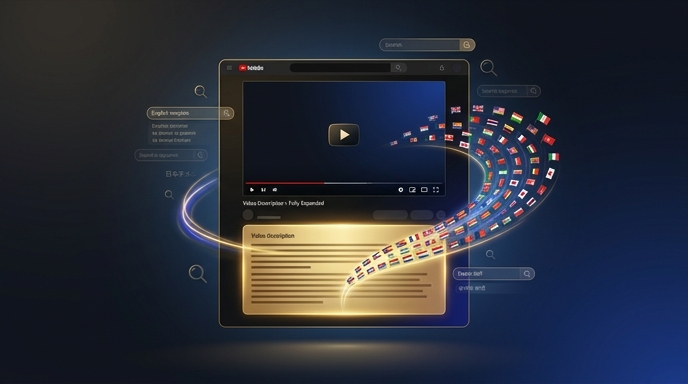
The only way to enter a language-specific search index is to provide native metadata in that language. Not auto-translated. Not machine-generated on the fly. Properly uploaded metadata through YouTube's API that the search algorithm treats as the canonical title for that language. VidLocalizer does exactly this — pushing translations as native metadata that YouTube indexes for search.
Real Search Traffic Results
A tutorial channel I tracked had a video titled "Как собрать игровой ПК за 50000 рублей." It ranked well for Russian search queries. The creator translated the title into 100+ languages, including English: "How to Build a Gaming PC for $500." Within three weeks, YouTube Studio showed the video ranking for search terms in 14 languages. "How to build a gaming PC" in English. "Como montar um PC gamer" in Portuguese. "Cara merakit PC gaming" in Indonesian. Each translated title captured search traffic from a previously inaccessible market.
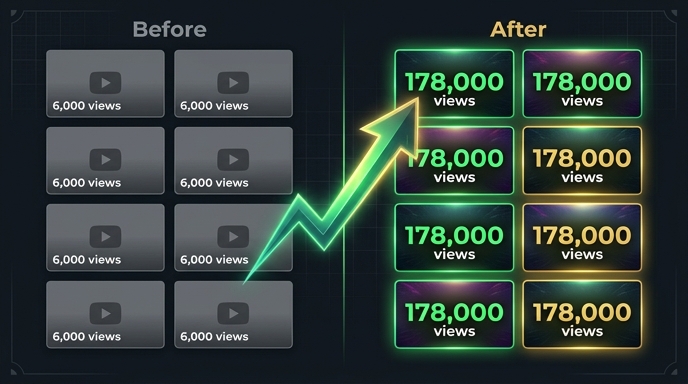
The search traffic numbers told the story. Before translation: 500 monthly search views, all Russian. After translation: 12,000 monthly search views across 14 languages. Russian search traffic didn't drop. It stayed the same. The other 11,500 views were pure addition — traffic that was always there, searching for exactly this content, unable to find it until the titles were in their language.
The Untapped Keyword Opportunity
Here's where it gets exciting for SEO-minded creators. Most keyword research tools only analyse one language. They show you competition and search volume for Russian keywords, or English keywords, or Portuguese keywords. They don't show you the massive keyword gaps in other languages.
In many niches, non-English search queries have shockingly low competition. A Russian tech review competes with thousands of other Russian tech reviews. The same review translated into Turkish competes with maybe ten Turkish tech reviews — if that many exist. The same review in Vietnamese might be the only result for that query. You're not just adding search traffic. You're capturing uncontested search real estate in language after language.
How to Optimise Translated Titles for Search
Don't just translate your title word-for-word and call it done. Think about how people search in each language. The Russian search query might use different phrasing than the Portuguese query for the same topic. VidLocalizer handles this natively — the translations are localised, not literal. The Portuguese title will use the phrasing that Portuguese speakers actually search for.
Pair translated titles with translated descriptions and subtitles. YouTube's algorithm uses all three to determine search relevance. A translated title opens the door. A translated description and subtitles walk through it. The full metadata package signals to YouTube that your video genuinely serves that language market, which boosts your rankings compared to videos with only a translated title.
Every language is a new chance to rank. Every ranking is a new source of views. Every view is a potential subscriber. The math is relentless in your favour — if you translate your titles. If you don't, you're still competing in one search engine while everyone else claims the other 99.
Localize your YouTube channel today
3-day free trial · 80+ languages · cancel any time