YouTube Shorts is the platform's answer to TikTok — short, vertical, endlessly scrollable videos designed for maximum discovery. The Shorts shelf is YouTube's most powerful distribution surface, capable of pushing a video to millions of viewers who have never heard of your channel. Sixty billion daily views. Creators are flocking to the format, uploading Shorts alongside their long-form content, chasing that algorithm spike. But almost all of them are making the same mistake they make with long-form videos: uploading in one language and hoping for global reach. Your Russian-language Short is invisible to the billions of YouTube users scrolling Shorts in other languages. And unlike long-form videos, Shorts live and die by rapid discovery. If the first 24 hours don't deliver, the algorithm moves on. Translating your Shorts gives them 100 chances at discovery instead of one. Here's exactly how to do it.
Why Shorts Are Different From Long-Form Videos
Shorts and long-form videos use different discovery mechanics. Long-form videos rely heavily on search, suggested videos, and browse features. Shorts rely almost entirely on the Shorts shelf — the infinite scroll feed that serves vertical videos based on viewer interests, watch history, and engagement patterns.
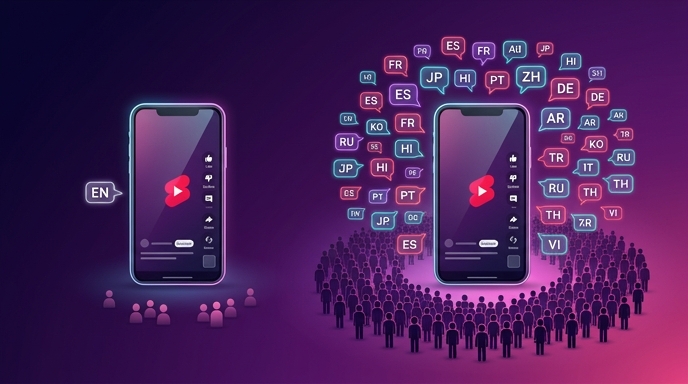
The Shorts shelf is language-aware but not language-exclusive. YouTube's algorithm will show a viewer Shorts in multiple languages if it thinks the content matches their interests. But the algorithm can only match content it understands. A Russian-language Short with Russian metadata will be tested against Russian-speaking Shorts viewers. A Portuguese-translated Short can be tested against Portuguese-speaking Shorts viewers. The content is the same. The audience pool is completely different.
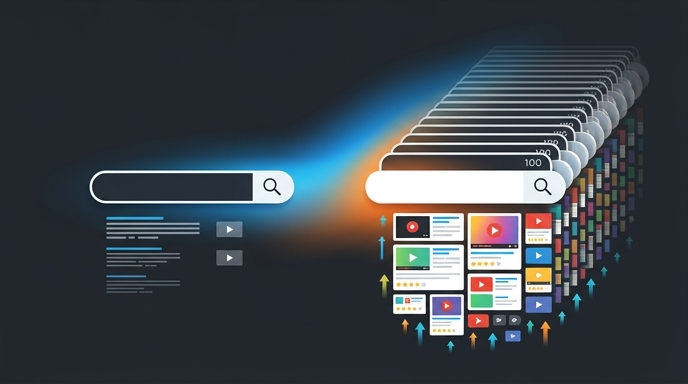
The Shorts algorithm is also more aggressive in the testing phase. It shows a new Short to a seed audience quickly — sometimes within minutes of upload. If the engagement signals are strong, distribution expands rapidly. If they're weak, the Short dies. Translation gives you 100 parallel seed audiences instead of one. If the Russian audience doesn't respond, the Indonesian audience might. The Portuguese audience might. One hit in one language can trigger broader distribution everywhere.
What to Translate on Shorts
Shorts have less metadata than long-form videos, but what they have matters enormously. Here's what needs translation and why.
Title: Shorts titles are shorter than long-form titles, but they still factor into YouTube's understanding of your content. A translated title helps the algorithm categorise your Short correctly in each language. It also appears in search results — yes, people search for Shorts too. A Portuguese-translated title means your Short can appear in Portuguese search queries.
Description: Shorts descriptions are often overlooked, but they provide context the algorithm uses for discovery. Include relevant keywords in each translated description. Keep it concise — Shorts viewers aren't reading long descriptions. But the keywords matter for the algorithm.
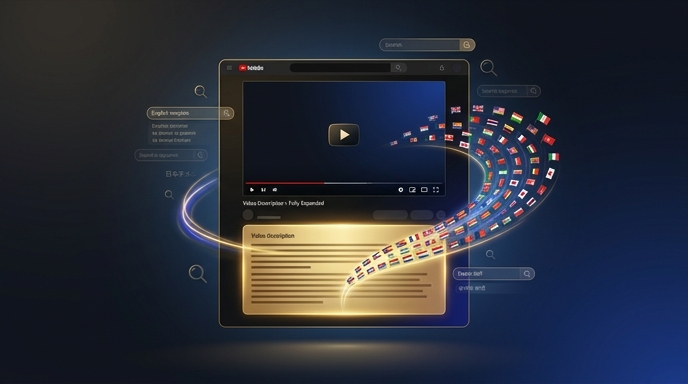
Captions/Subtitles: This is the big one for Shorts. Many Shorts viewers watch without sound — in public, in bed, in waiting rooms. Captions are essential for silent viewing. But they also serve a second purpose: YouTube indexes caption text for discovery. A Short with Portuguese captions is more likely to be shown to Portuguese-speaking viewers, even if the audio is in Russian. The algorithm reads the captions. Translated captions signal that your Short is relevant to a new language audience.
On-Screen Text (if any): If your Short includes on-screen text in Russian — titles, labels, callouts — that text won't be understood by international viewers. VidLocalizer handles metadata and subtitles. On-screen text would need to be edited in your video editor before upload. For maximum global reach, consider using minimal on-screen text or making it visual rather than language-dependent. Emojis and icons work in every language. Russian text only works in one.
Step-by-Step: Translating Shorts With VidLocalizer
Step 1: Upload Your Short as Normal
Create and upload your Short exactly as you normally would. Russian title, Russian description, Russian captions if you use them. Get it live on your channel. The initial Russian-language audience will see it first — that's fine. You're about to expand that audience massively.
Step 2: Open VidLocalizer
Connect your YouTube channel if you haven't already. Your Short will appear in your video list alongside your long-form content. VidLocalizer treats Shorts the same as any other video — the API doesn't distinguish between formats for metadata updates.
Step 3: Select the Short
Find your Short in the video list. Thumbnails make Shorts easy to spot — they're vertical. Select it. You can select multiple Shorts if you're translating a batch.
Step 4: Choose Languages and Generate
Select all 100+ languages. Shorts metadata is smaller than long-form metadata — shorter titles, shorter descriptions — so generation is even faster. Click generate. The tool produces translations in seconds.
Step 5: Push to YouTube
Click push. The translated titles, descriptions, and captions upload through YouTube's API. Your Short now exists in 100+ languages. Total time from upload to global: under five minutes.
When to Translate Shorts
Timing matters for Shorts. The Shorts algorithm evaluates content rapidly in the first hours after upload. For maximum impact, translate your Short immediately after publishing. Don't wait a day. Don't wait a week. The sooner the translated metadata is available, the sooner the algorithm can test it against global audiences.
Some creators translate Shorts before publishing — preparing the translations in VidLocalizer and pushing them the moment the Short goes live. This is the ideal workflow if you want the algorithm to have global metadata from the very first impression. It takes an extra two minutes in your publishing process. The potential upside is enormous.
For existing Shorts already in your library, translate them in batches. Older Shorts can still find new audiences. The Shorts shelf occasionally resurfaces older content if engagement signals improve. Translated metadata gives those resurfaced Shorts a chance to reach new language audiences.
Real Results From Translated Shorts
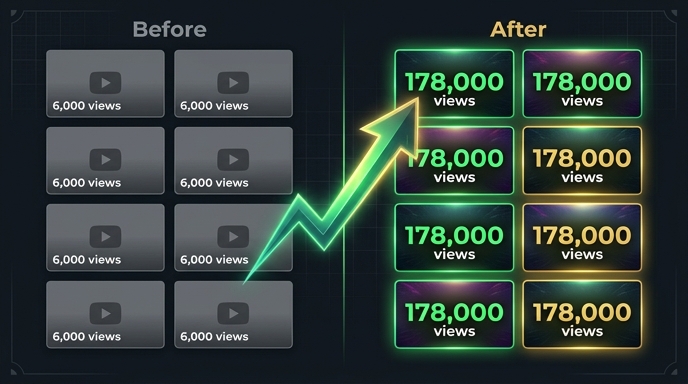
A Russian creator making cooking Shorts — 60-second recipe videos — translated 30 Shorts through VidLocalizer. Before translation, the Shorts averaged 1,500 views each, almost entirely from Russian-speaking viewers. After translation, the best-performing Short hit 180,000 views. The top countries were Brazil, Indonesia, and Mexico. The creator's theory: cooking is visual and universal. The translated titles and captions made the Shorts discoverable. The visual content did the rest — you don't need to speak Russian to understand a 60-second recipe video.
Another creator in the tech niche translated 15 Shorts reviewing gadgets. One Short — a 30-second phone comparison — reached 400,000 views after Portuguese translation. Brazilian tech enthusiasts found it through the Shorts shelf. The creator had never intentionally targeted Brazil. The algorithm found the audience once the metadata made the Short eligible.
Shorts as a Global Funnel
Think of translated Shorts as a global funnel. A viewer in Turkey discovers your Short through the Shorts shelf. They watch. They engage. They visit your channel. They see your long-form content — also translated into Turkish through VidLocalizer. They subscribe. They become part of your global audience.
Shorts are the top of the funnel. They're designed for discovery. Translation multiplies the number of funnels you have. One Short in one language is one funnel. One Short in 100 languages is 100 funnels. Each funnel feeds your channel with new viewers from a new market. The compounding effect over dozens of Shorts creates a global audience base that would be impossible to build through one language alone.
Stop uploading Shorts for one language market. Upload them globally. The format is built for discovery. Let it discover audiences everywhere.
Localize your YouTube channel today
3-day free trial · 80+ languages · cancel any time